

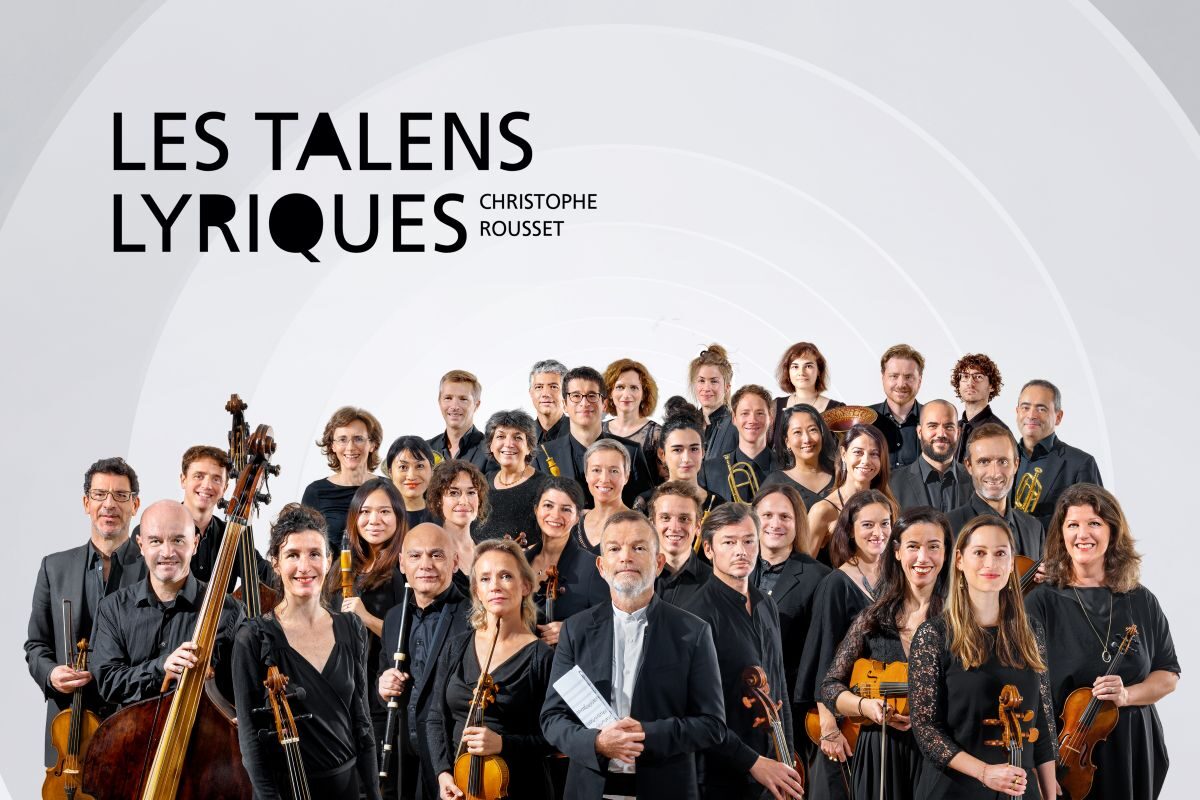

This new recording from Les Talens Lyriques and Christoph Rousset, recorded last year at the Festwochen der Alten Musik in Innsbruck, breaks new ground in a number of different ways. It is the world premiere recording of this opera to be sure, but more importantly it makes a novel claim about the re-direction of operatic style and convention in the mid-eighteenth century that has broader implications.
Tommaso Traetta is not a well known name now, but in the mid-eighteenth century he was one of several Neapolitan opera composers who developed successful international careers, in his case first at the court in Parma, then in Vienna and finally in St Petersburg. It was for Vienna in 1763 that he wrote Ifigenia in Tauride to a libretto by Marco Coltellini. This story was set frequently in these decades when the reform of the conventions of Baroque opera was under close discussion – its plot is austere, focused on duty, loyalty, and resistance to tyranny, with little or no love interest. There is an inward focus on states of mind and conflicts and tensions rather than external action. Essentially it offers the final resolution of the Oresteia with Orestes and Iphigenia reunited, the Furies placated and the Gods appeased. Very much a sober-suited pushback against the frillier operatic excesses of the previous decades, and with music at the service of drama rather than the opposite.
Such reforms are usually associated with Gluck, not least because he issued a specific manifesto to that effect. But what this recording amply demonstrates is that there were other composers in the same era engaged in precisely the same task, though without the theoretical self-projection. The reaction is part of a broader Zeitgeist, in other words. This is evident immediately apparent in the recording where the recitative is mainly accompanied and expressive rather than simply narrative exposition, the orchestra has a much more substantial role to play in underscoring and expleting the mood of arias, the chorus has a lot to do too, and where the arias themselves are simpler than usual, with far less florid writing, and much of time set in ways that mirror speech rhythms.
Two examples will have to suffice. At the heart of Act One is a ten minute aria delivered by Ifigenia that is entirely unshowy, but still an overwhelming statement of her pain and defiance at having to sacrifice strangers arriving in Tauris. It is delivered with plangent eloquence and biting resentment by Rocio Perez. Contrastingly, in Act Two we encounter a scene in which Orestes is persecuted in his dreams by the Furies. Rafal Tomkiewicz presents the terror and despair of the character with dramatic conviction, and the chorus and orchestra sweep all before them in their depiction of night terrors. These are scenes that are quite the equal of Gluck when he came to set the same operatic scenario for Paris some sixteen years later.
As you would expect from this set of performers, there is excellent attack and focus throughout. Novacanto are entirely credible whether as the people of Tauris or as Furies. As the tyrant of Tauris, Toante, Alasdair Kent uses his arias to threaten and bully, deploying traditional decoration with proper dramatic intent; and Suzanne Jerosme and Karolina Bengtsson are entirely convincing in the subsidiary roles of Pylades and Doris.
The performance is showcased in an excellent double-album book format, with useful accompanying essays, though the English translation of one is somewhat wayward. The sound quality has a presence and bloom to it that recreates performance conditions very plausibly. This issue is a must for enthusiasts for eighteenth-century opera, and indeed anyone interested in the history of the genre.
Composer: Tommaso Traetta
Les Talens Lyriques & Novocanto
Director: Christoph Rousset
Cast: Karolina Bengtsson, Suzanne Jerosme, Rocio Perez, Rafal Tomkiewicz
Aparte Music Label