

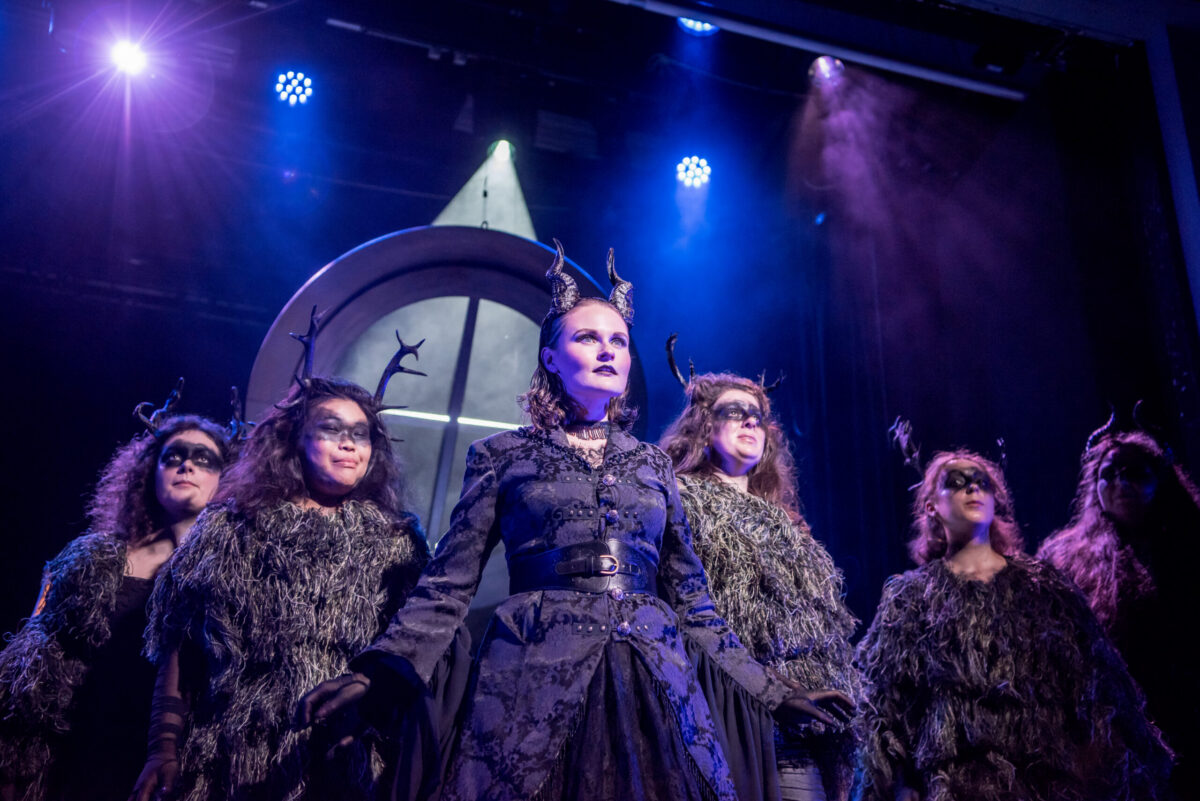

This chamber opera by Pauline Viardot is another obscure treasure rediscovered by the Buxton Festival. Viardot was a celebrated singer, composer, and teacher whose career spanned from the 1840s to almost the end of the nineteenth century. She was admired by many of the famous European musical and literary figures of the age. One of those admirers was novelist Ivan Turgenev, who wrote the libretto for this piece, and it was first performed at his villa in Baden Baden in 1867.
Krakamiche is an elderly sorcerer whose magical powers are declining. He lives with his daughter, Stella, in a hovel in the forest, much to the fury of the wood-elves and their queen who want him gone. They hatch a plan to drive him out. Meanwhile Prince Lelio is wandering the forest in search of Stella whom he has seen from afar having fallen in love with her. The queen hopes that Lelio will help her and she gives him a magic flower that makes him invisible so he can woo Stella. Krakamiche realises that powerful forces are ranged against him and tries one last time to revive his magical powers but he fails. In the end, Lelio and Stella persuade him to leave the forest and travel to Lelio’s home, where he will be treated with respect and retire in comfort. They leave and the elves celebrate.
The sorcerer is played by versatile baritone Phil Wilcox. He is a fine singer and he carries off the ‘grumpy old man’ persona with real style. He almost makes the text funny—but comedy was never Viardot and Turgenev’s strongest suit. Young Welsh soprano Eleri Gwilym is a charming Stella and a loyal daughter despite her father’s callous behaviour. Lelio is a ‘trouser role’, so mezzo Rebecca Anderson sings the part and turns in an amusing Prince Charming pastiche. The comic role of the sorcerer’s servant is given a stroppy teenager gloss by David Karapetian, winner of the 2025 Bryn Terfel Song prize, his splendid tenor is rather underused in such a tiny role. Jessica Lawley, as the lead elf Verveine, also sang beautifully despite the brevity of the role. Sophie Clarke was an imperious if unkind queen, plotting the downfall of poor old Krakamiche. The elf chorus, all female members of the Buxton young artists programme, produced some of the most beautiful music of the show.
The chamber orchestra of strings, led by Erika Gundesen from a grand piano – which unfortunately took up half of the small stage – was suitably flexible and thrived on the somewhat thin orchestral score.
The opera is one of three written with Turgenev, initially for private performance by her family and pupils, and its parallels with The Magic Flute are very obvious. Its origins help explain some of the factors which make this operette fantastique charming but limited. Director Lysanne van Overbeek, whose previous work for Gothic Opera impressed me, has done wonders with the limited space available – a rickety roof light conjuring up the sorcerers hovel, branches and twigs the forest, and entrances and exits all around the theatre. If there are weaknesses, they lie in the threadbare plot and uneven comedy, both consequences of a work conceived for private performance rather than the public stage, and they have their roots in Viardot’s understandably limited ambition. Even so, this delightful rarity justifies its revival, and it sits comfortably alongside the imaginative and adventurous programming that has become a hallmark of the Buxton International Festival.
Venue: Buxton International Festival
Composer: Pauline Viardot
Libretto: Ivan Turgenev
Conductor: Erika Gundesen
Director: Lysanne van Overbeek
Performers incl: Phil Wilcox, Eleri Gwilym, Sophie Clarke, Rebecca Anderson
Running time: 1 hour 15 minutes
Dates: until 25 July