


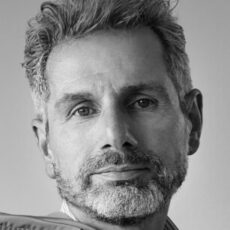
We are all familiar with the mesmerising shape-shiftng of a murmuration of starlings as they wheel across the twlight skies, but rarely, if ever, has anyone tried to transfer this continuous ripple of motion to the world of dance, despite the many generation of synchronised formation dancing, from the movies of Busby Berkeley onwards. Here Sadeck Berrabah and his thirty dancers have developed a programme that starts from an initially small vocabulary of gestures before flowering into an elaborate sequence of routines for the whole company and smaller groups within it, which gives the whole seventy five minutes a compelling allure.
Their gestural range is developed from extreme angularities in the upper body that are repeated across the group with impeccable discipline and precise timing. Different levels are enabled initially by having one third of the dancers on the floor with the other groups seated and standing behind them. Then this static formation is broken up as the tempo of the dance music speeds up, creating a variety of formations before the static ensemble resumes for the final ten minutes, but this time with a variety of props added, whether umbrellas, hats, jackets or flashlights. By this time Sadeck himself has appeared on stage as an impresario and conductor figure both directing and participating in the action.
By this stage we are fully familiar with the visual language and can appreciate better the intricacy and slickness of the moves in their full elaboration. This is then usefully deconstructed by Saddeck himself who gives the audience a short session of tuition and participation in some basic moves. He is a disarmingly natural and communicative teacher even in with an unprepared audience of dance enthusiasts. through this intervention we begin to feel the sharpness and bite of the rhythmic language within ourselves, an important aspect of the overall impact of the evening.
One can immediately understand why this dance troupe has had such success at home in France: there is real originality here that is still evolving. But there are some limitations which become apparent when the programme extends beyond the hour. The absence of focus on footwork and the lower body is a conscious decision, but it has its limitations. Some of the set piece static numbers feel rather repetitive, and you sense that the dancers would appreciate a chance to offer a wider range of expressive gestures, even if they still remained synchronised rather than an expression of individuality. I would also have appreciated a greater variety in the music which remained in a groove of angular cross-rhythms for rather too long. When more lyrical episodes appeared the contrasting relaxation in intensity brought with it no loss in communication or clarity of expression.
One can see the origins of this style in geometry, in a certain take on historic Egyptian style, and in martial arts gestures, but there is still scope for more intimacy and tenderness to emerge, which was crystallised in a few superb duets of tantalising brevity. I would urge them to develop more of this material in future.
Production values around the show were tight and supportive, with very simple flexible settings but vivid and quite complex lighting shifts which mirrored the sharp editing style of the dance aesthetic with expert precision. All in all this was a most impressive debut in the UK, and hopefully there will be many return visits.
Director & Choreographer: Sadeck Berrabah
Until 20 September 2025
1 hour 15 mins, no interval
Photo Credit: Fabien Malot