

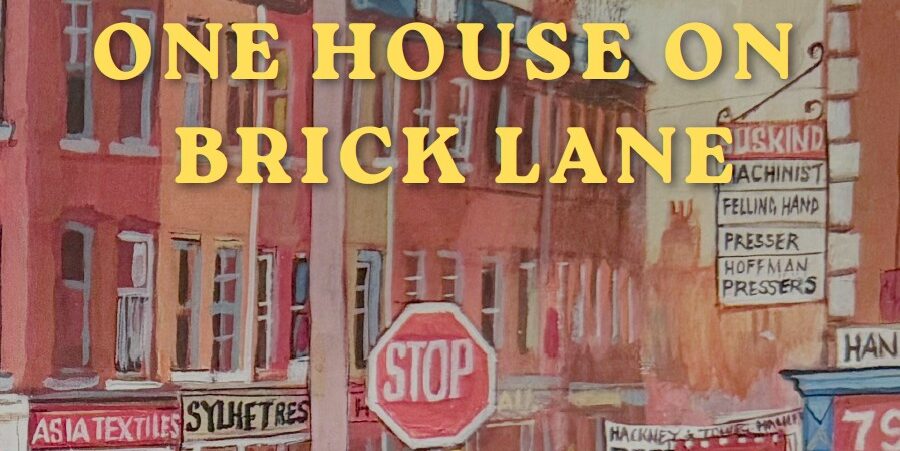

Brick Lane in London has been an area of immigrants for centuries. Following waves of French Huguenots came Irish seeking relief from famine, Jews fleeing pogroms, Caribbean people invited to rebuild post-war Britain and Bengalis in the aftermath of Partition. Immigration has left its mark on the streets of London’s East End, leaving a rich blend that has made the area richer and stronger in its food, its architecture, its people.
Of course, there have always been those who do not see immigration in this way, who only see difference and what divides us, and who seek to exploit that division. Whether that be Oswald Moseley’s fascist Black Shirts in the 1930s or social media driven far-right riots in 2026, such hatred has always been present.
In the 1970s and 1980s, it was the National Front that made Britain’s streets unsafe for black and brown people. The racially-motivated 1978 murder of Altab Ali was a particular flashpoint, leading to a march on Downing Street and eventually driving something of a shift in attitudes.
One House on Brick Lane is set seven years after Ali’s murder, in the house of a Bangladeshi family facing a hostile environment and the threat of eviction. Their father has died of a heart attack, almost certainly caused by the constant struggle of fighting for a better, fairer life for his family. Eldest son Bilal – still a teenager – strives to take up his father’s position at the head of the family. His firebrand sister Arya wants to take to the streets to fight for justice, while 12-year-old Moussa just wants his family to stop treating him like a kid.
Around them, the ghosts of the many immigrants who have lived in the family’s house since its construction spectate and commentate, a Greek chorus drawn from half a dozen different nations. They reminisce and talk over each other, each actor holding their own as a distinct entity. The ghosts cannot leave the houses the Huguenots built, and sensibly the production largely remains with them, leaving the chaotic streets to our imagination. Within the walls of 60 Brick Lane, the family squabble about how to achieve belonging, while the ghosts watch on, having seen it all before.
The young cast are full of energy. What they lack in polish they more than make up for with verve and spirit, and a clear sense that the story they are relating is a personal one. Most heartbreakingly, we see how far-right ideology robs children of their childhoods, forcing them to grow up and tackle adult themes long before they should have to. Bilal does his best to be the breadwinner in a grown-up leather jacket and phone voice. Arya tries to carry on her father’s legacy of fighting for justice, losing friendships and respect by doing so.
The set is a simple living room, immediately relatable, and the clashing costumes – from Huguenot weavers to 1970s lapels – are an eloquent visual representation of the story’s message of strength through diversity. While the script occasionally feel anachronistic, with twenty-first-century turns of phrase puncturing the eighties aesthetic, its roots in oral histories and lived experience give it a sense of immediacy and authenticity.
The play’s message is not new, or complex, but in the hands of its young performers it is powerful, while the ghosts force us to confront the way history of immigration is woven for the better into the fabric of our nation, whether we choose to acknowledge it or not.
Performed at Surgeon’s Hall on 10 August as part of the Edinburgh Fringe
01-15 August (not 09), 13:20
Running time: 1 hour, no interval
Created and performed by the Mulberry Theatre Company