

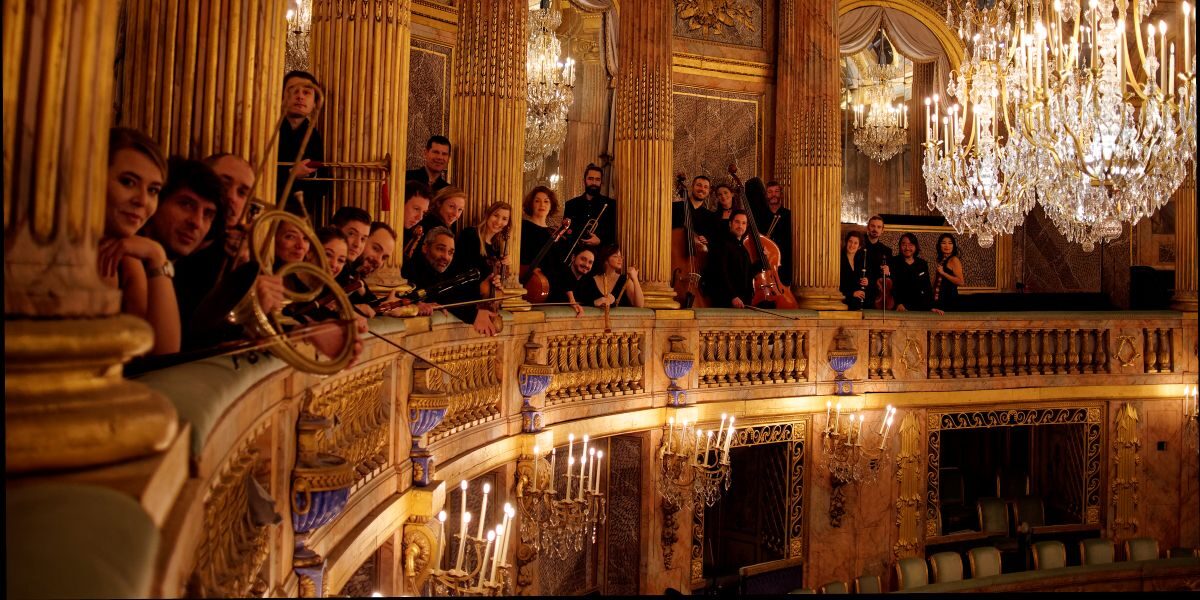
I was fortunate to be able to hear these forces perform in Handel’s Ariodante last year with Franco Fagioli in the lead role (reviewed 13/12/25). This follow-up visit, their first to the UK, was eagerly anticipated by a packed St Martin’s in the Fields, and we were not disappointed.
Counter-tenors come in many shapes and forms. Some are at home in Dowland and Purcell and Britten, while others head straight for the operatic repertory previously the domain of the castrato. Fagioli falls firmly within the latter category – indeed it would be fair to say he has an acute awareness of the historic origins and conventions associated with this vocal type. For example, as Ariodante, he was quite happy to repeat sections of arias that had received audience acclaim, even with different ornamentation, and we benefited from a similar sense of spontaneous audience engagement in this concert too.
The programme was built not around composers so much as repertory regularly performed by the last great castrato Giovanni Battista Velutti, who made his name in the early nineteenth century operas of Rossini and his contemporaries. Not only did this organising thread offer a genuine coherence to the programme, but it also introduced us to composers such as Nicolini, Bonfichi, Mercadante and Zingarelli, whose works clearly deserve a broader hearing.
Fagioli is slightly built, but possesses a strong and supple voice that proved equal to the many vocal challenges he took on. While the instrument is not the most naturally beautiful in tone, he has an ironclad technique, impeccable taste in ornamentation, excellent diction and a fine range of dynamics, with precise trills and even coloratura runs. His top is always thrillingly on target and the chest voice is rich and evocative too. He can take his sound down to a finely-spun legato filament but equally project a fierce fanfare when needed. Finally, he is a natural actor; and while the scope for dramatic representation in this setting was limited, he made a conscious effort to be inside each role and situation that the music demanded.
He sang five programmed operatic extracts and a short review can only mention a few standout moments. Each number was a developed, sometimes lengthy scene, requiring several changes of gear from recitative to arioso to cavatina and cabaletta. Perhaps the highpoint for the evening was Rossini’s substantial Scene, Aria and Cabaletta, ‘Dolci silvestri orrori/Gentle forest terrors’ from Aureliano in Palmira. This was a dark and deep meditation on potential romantic abandonment, the sort of territory that you might associate with Marilyn Horne. But Fagioli made a wholly convincing case for his own voice colour and interpretation, which covered a lonely emotional journey from introverted apprehension through to virtuosic display. Similar qualities were on show in his two generous encores, one from Semiramide and the other, the final rapturous ‘Alleluja’ from Mozart’s Exsultate jubilate.
The vocal items were interspersed with orchestral movements, whether operatic overtures or a movement from a violin concerto. The latter, a Polonaise by Pierre Rode, was played with blistering panache by conductor Stefan Plewniak, making you want to hear him in the whole work. However, I had a few reservations about his overall approach to the overtures. While no one could fault his enthusiasm in urging on his players, the pace was sometimes too break-neck and without the wide dynamic constrasts this music needs to reach its full amplitude. There ought to be points of gentler repose within which the delicious wind solos can bubble up; and for a Rossini crescendo to register as it should you need to start from a genuine pianissimo rather than mezzo forte.
That said, there is no doubt this is a superb period band that can create a stylish result from any early music they undertake. It was an extra pleasure that they played themselves in and out with marches by Lully that reference their own core repertory back home at the palace of Versailles. This was a richly rewarding and stimulating evening on all fronts.
Orchestre de l’Opera Royal de Versailles
Conductor: Stefan Plewniak
Soloist: Franco Fagioli
13 June 2026
2 hrs with interval
Photo Credit: Pascal Le Mée