


In this latest addition to the recordings of the major works of Andrew Downes we reach his first two cantatas for choir and orchestra, the works in which he finds his own true voice and subject matter. It is fascinating to see the evolution taking place across the span of these two cantatas, both dating from the 1980s. In the opening sections of The Marshes of Glynn the choral writing has echoes of the ecclesiastical groove Downes imbibed from Herbert Howells, and there is even a point where the modal writing and horn figures evoke Vaughan Williams’ Fifth Symphony. But as we move on further it is clear that a different, grittier kind of pastoral is developing. The musical language of spirituals emerges, and when Brendon Gunnell enters with a stirring evocation of freedom we have clearly crossed the Atlantic.
The poem by Sidney Lanier, written in 1878, describes the endless sweep of the tidal salt marshes off the coast of Georgia, the old oaks, the wind sighing through the grass and the rapid rivulets of sea spreading inwards as the tide turns. Lanier is something of a mournful poet, looking on nature as a place of escape and freedom from burdens, which in his case focused on the legacy of the Civil War. It is a bit like Matthew Arnold’s Dover Beach, but without the deep philosophy. We do not have to dwell on the particular cause of his inspiration: instead we can focus on the beauty of the descriptive writing for the orchestra and the assurance with which the choral forces are handled. If anyone were to put this thirty minute piece up on Youtube it would fit exactly with a display of paintings from the Hudson Valley School, a different landscape, but still a celebration of unspoilt America invested with a spiritual dimension, what Thoreau called the ‘tonic of wildness.’
In the second work, Song of the Prairies, another half-hour work, we are dealing with William Cullen Bryant a more upbeat poet and a different set of musical markers. Here we have a fine balance between minimalism in the orchestra and harmonic variety in the voices, divided between four soloists, a semi-choir of high voices and a full chorus. In his programme note Nicky Swett suggests that while minimalism is often rhythmically vital but harmonically inert, English choral music is too often the opposite. Whatever the truth in the broader generalisation, it is certainly the case that here the elements of both approaches combine very successfully to vitalise a poem that is disconcertingly triumphalist in its rhetoric despite an underlying anxiety about environmental degradation. There are also many moments of deft and innovative instrumentation and skilful a capella writing. At the very end there is a soulful passage for two trumpets that makes you think that this is a fanfare, not for the common man, but the common land, that the common man cannot be trusted with.
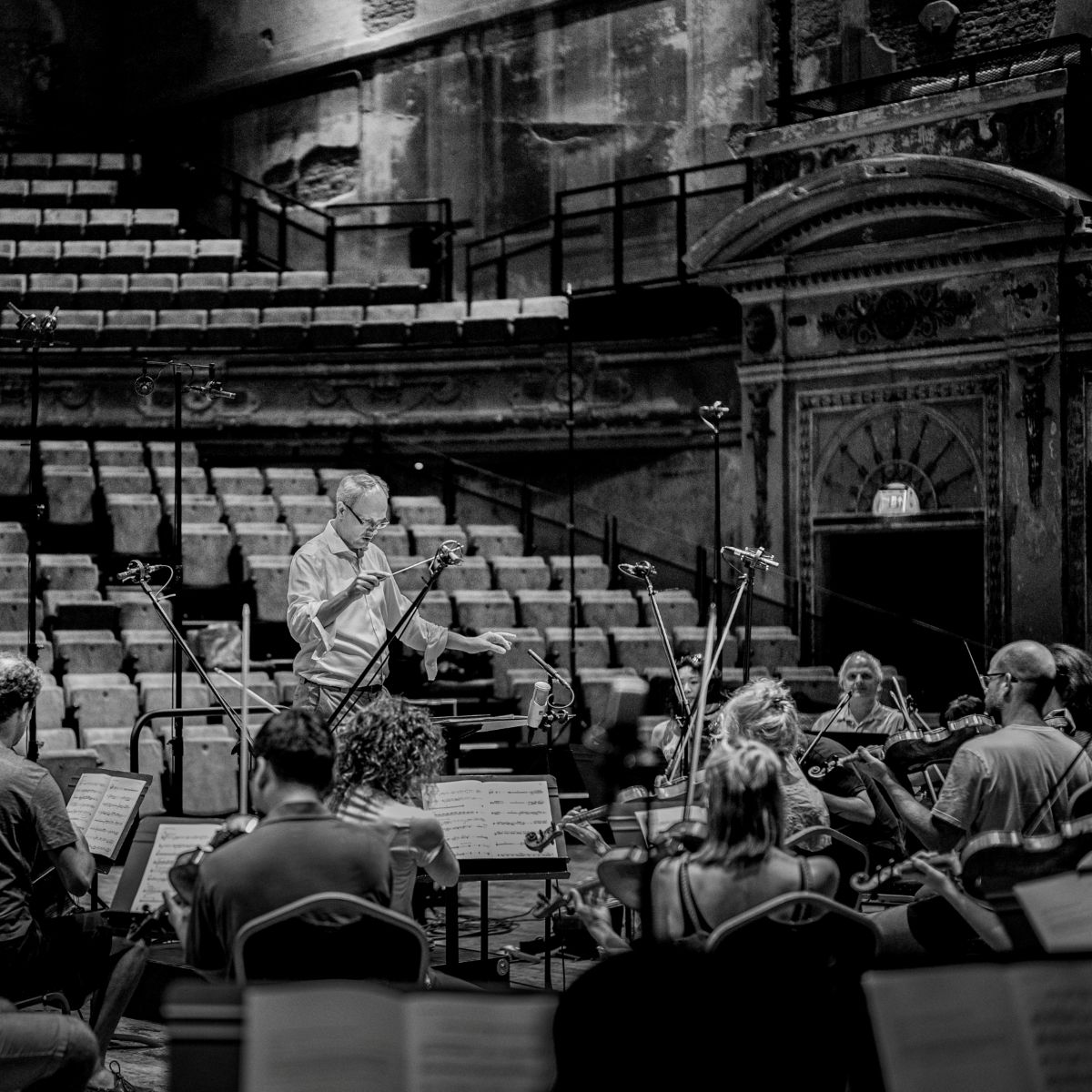
These are tight and focused performances, with excellently projected diction and a pleasing sound balance, whether in the moments of delicate repose or full-throated declamation. Both these works would, I think, be well received at the Proms, whether for their musical language or the prescient environmental messages they contain, and it is to be hoped that this recording helps to get the word out to a wider audience.
Composer: Andrew Downes
Philharmonia Orchestra and Voices
Conductor: David Trippett
Soloists: Brenden Gunnell (Marshes); Paula Downes, Simon Grant, Sam Madden, Eleanor Minney (Prairies)
Release: 24 July 2026